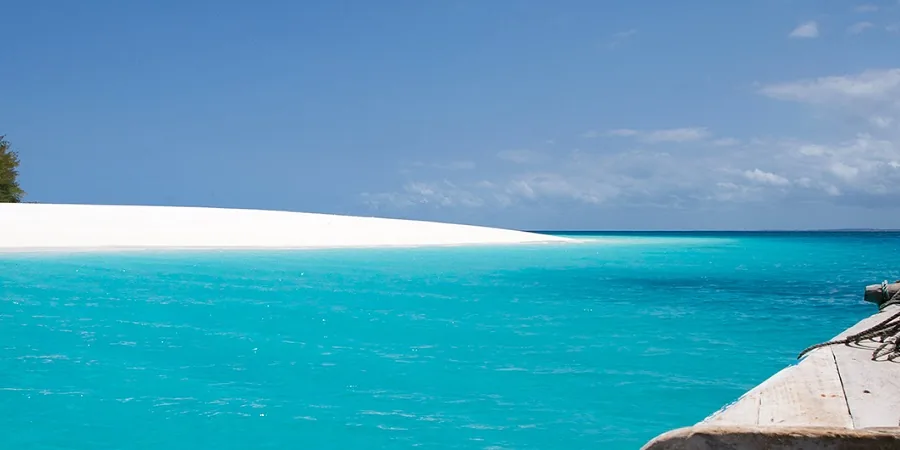
Where Is Zanzibar and How Do You Get There?
Zanzibar (officially Unguja) is a semi-autonomous archipelago that's part of Tanzania. It's reached by a 30-minute flight from Dar es Salaam, a 45-minute flight from Kilimanjaro International Airport, or a 2-hour ferry from Dar es Salaam.
For travelers combining Zanzibar with a Tanzania safari or Kilimanjaro climb, the KIA (Kilimanjaro) to ZNZ (Zanzibar) flight makes the combination logistically smooth — one of the reasons the safari-climb-beach combination is so popular.
Best Time to Visit Zanzibar
Zanzibar's best months are June–October and December–February — both periods of dry weather, calm seas, and low humidity. The beaches are excellent and water activities are at their best.
The long rains (April–May) bring heavy, often daily rainfall that limits beach time. The short rains (November) are briefer. The monsoon season affects the west coast more than the east, so some east-coast properties maintain better conditions year-round.
Stone Town: What Most Visitors Miss
Stone Town is a UNESCO World Heritage Site — and most visitors miss 90% of it by staying for only two hours on an organized tour. The maze of narrow streets rewards walking without a guide: the Darajani market in the morning, the Arabic fort, the old slave market memorial at the Anglican Cathedral, and the evening food market at Forodhani Gardens.
The architecture tells Zanzibar's layered history — Omani Arab, Indian merchant, and British colonial influences visible in carved doors, balconies, and rooflines. Most carved doors are original, some hundreds of years old.
Zanzibar Culture: What Travelers Get Wrong
Zanzibar is a majority Muslim island and cultural norms around dress and behavior are meaningfully different from mainland Tanzania's resorts.
At the beach and in resort areas, normal beachwear is fine. In Stone Town and rural areas, both men and women should cover shoulders and knees. Women especially should cover up when moving between the beach and town — a sarong or light covering over beach wear is appropriate and appreciated rather than seen as excessive.
Ramadan affects restaurants, schedules, and atmosphere significantly — worth being aware of if your dates coincide.
Food in Zanzibar
Zanzibari cuisine is one of the island's genuine pleasures — a fusion of Swahili, Arab, Indian, and Portuguese influences that produces seafood dishes, spiced stews, and flavors genuinely unlike anything on the mainland.
The Forodhani Gardens night market in Stone Town is a must: fresh grilled seafood, Zanzibar pizza (a local invention), sugarcane juice, and Urojo (Zanzibar mix soup). Most items cost $1–3. Mombasa Dishes restaurant and Emerson's rooftop are worth the splurge for a proper meal.
How Long to Spend in Zanzibar
- 2 days: Stone Town, one beach activity
- 3–4 days: Stone Town, Jozani Forest, spice farm, Nakupenda sandbank, proper beach time
- 5–7 days: Full island experience including east coast beaches, Prison Island, and genuine relaxation
Most travelers add Zanzibar as 3–5 days at the end of a safari or Kilimanjaro trip. This works well logistically and gives the island enough time to feel like more than a stopover.