Our Recommended Route for Most First-Time Climbers
from$2,090Per Person
What Is the 7-Day Machame Route?
The 7-day Machame Route is a camping climb across Kilimanjaro's southern slopes, with an extra night at Karanga Camp that gives you more time to acclimatise before summit night. You start at Machame Gate, cross the Shira Plateau, climb to Lava Tower, scale the Barranco Wall and summit Uhuru Peak (5,895 m) from Barafu Camp, then descend via Mweka. Prices start from $2,090 per person.
This is the itinerary we recommend for most first-time climbers. It combines the Machame Route's varied scenery with a steadier pace than the 6-day version: instead of walking from Barranco to Barafu in one long day, you stop at Karanga, so you start summit night better rested and better acclimatised.
This page covers each day with altitudes and walking times, how acclimatisation and summit night work, what is included in the price and how to prepare.
Climb at a Glance
| Duration | 7 days, 6 nights on the mountain |
|---|---|
| Start | Machame Gate (about 1,800 m), about an hour's drive from Moshi |
| Finish | Mweka Gate (about 1,640 m) |
| Summit | Uhuru Peak, 5,895 m, via Stella Point (5,756 m) |
| Sleeping | Mountain tents at designated campsites |
| Total distance | About 62 km |
| Difficulty | Challenging, but at a steadier pace than the 6-day version |
| Price | From $2,090 per person |
Route Highlights
- Our recommended balance of scenery, acclimatisation and length
- Acclimatisation via Lava Tower (about 4,600 m) before sleeping at Barranco
- An extra night at Karanga Camp, splitting the hardest approach in two
- The Barranco Wall scramble and views of Kibo's southern glaciers
- Sunrise at Stella Point, then the crater rim walk to Uhuru Peak
What Happens on Each Day of the Climb?
The 7-day Machame climbs gradually over five days, with the Lava Tower acclimatisation hike on Day 3 and an extra night at Karanga, then descends via Mweka. The table summarises each day.
| Day | Route | Sleeping altitude | Distance | Hiking time |
|---|---|---|---|---|
| 1 | Machame Gate → Machame Camp | 3,000 m | About 11 km | 5–7 hours |
| 2 | Machame Camp → Shira Camp | About 3,850 m | About 5 km | 5–6 hours |
| 3 | Shira → Lava Tower (4,600 m) → Barranco Camp | 3,950 m | About 10 km | 7–8 hours |
| 4 | Barranco Camp → Barranco Wall → Karanga Camp | About 4,000 m | About 5 km | 4–5 hours |
| 5 | Karanga Camp → Barafu Camp | About 4,650 m | About 4 km | 3–4 hours |
| 6 | Barafu → Uhuru Peak (5,895 m) → Mweka Camp | 3,100 m | About 17 km | 12–15 hours |
| 7 | Mweka Camp → Mweka Gate | Hotel (included) | About 9 km | 3–4 hours |
Day 1: Machame Gate to Machame Camp (3,000 m)
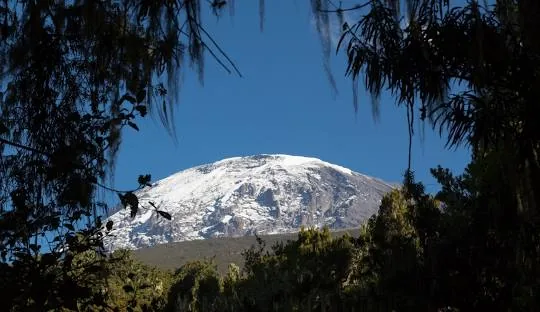
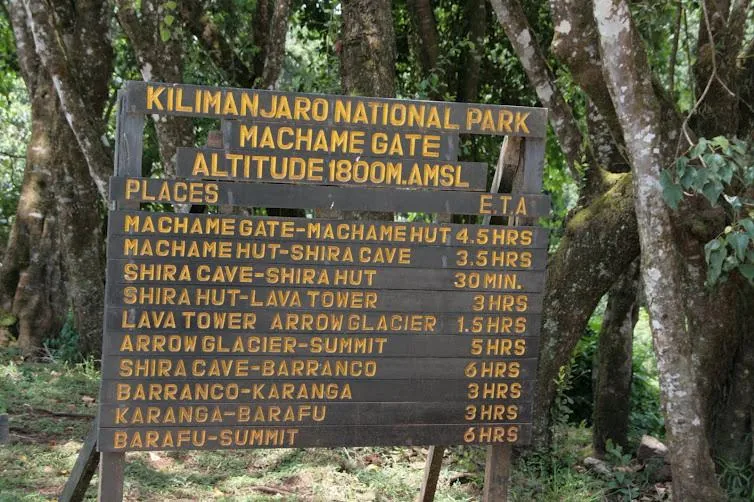
Day 1 climbs through Kilimanjaro's rainforest. After breakfast and a briefing from your guide, we drive you from your hotel in Moshi at about 9 am to Machame Village, where the crew prepares the loads and you receive a packed lunch. If the road is too muddy, the last 3 km to the gate is on foot, which takes about an hour.
After park registration, the trail climbs steadily through the forest. Good boots, gaiters and trekking poles help when the path is wet. You stop for lunch about halfway and reach Machame Camp in the late afternoon, where your tents are already set up.
- Overnight: Machame Camp (tents)
- Meals: Lunch and dinner, plus drinking water
- Terrain: Rainforest, steady climb, sometimes muddy
Day 2: Machame Camp to Shira Camp (about 3,850 m)
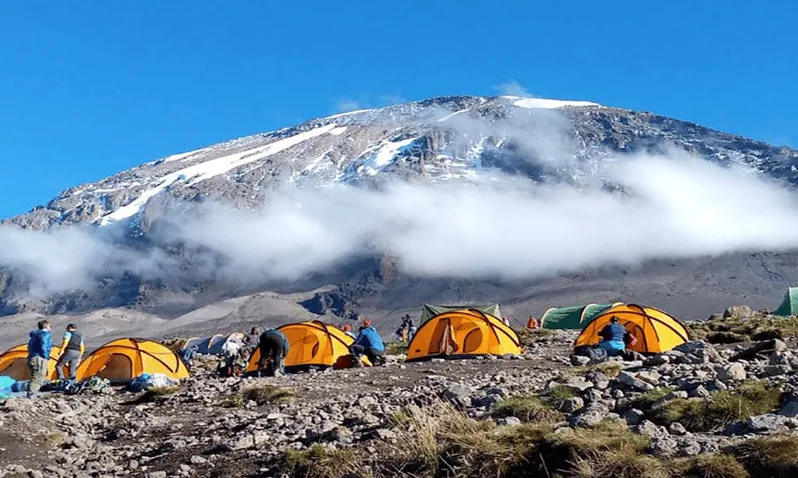
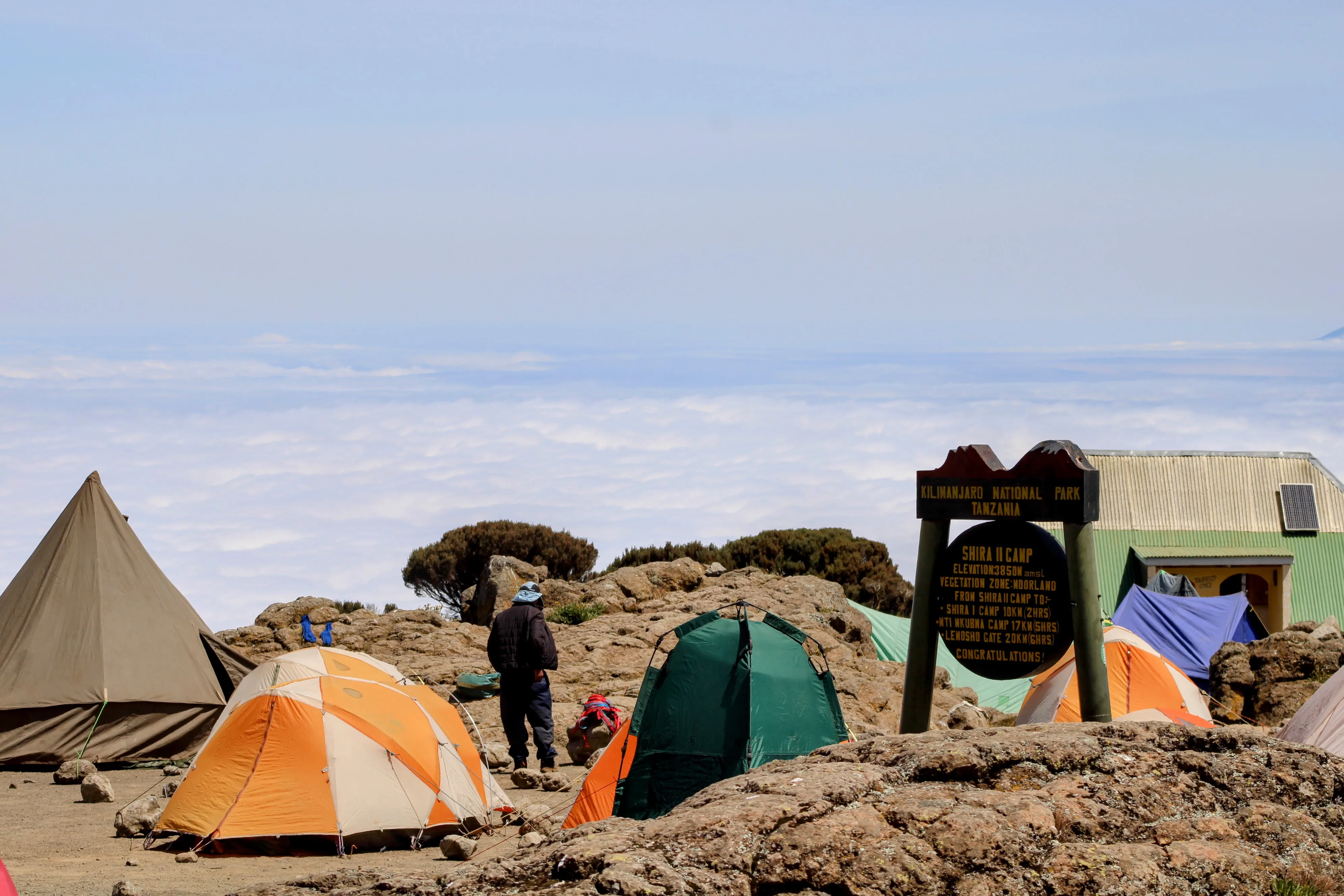
Day 2 leaves the forest behind. After about an hour through rainforest glades, you climb into open moorland with low shrubs, stopping for lunch after a couple of hours.
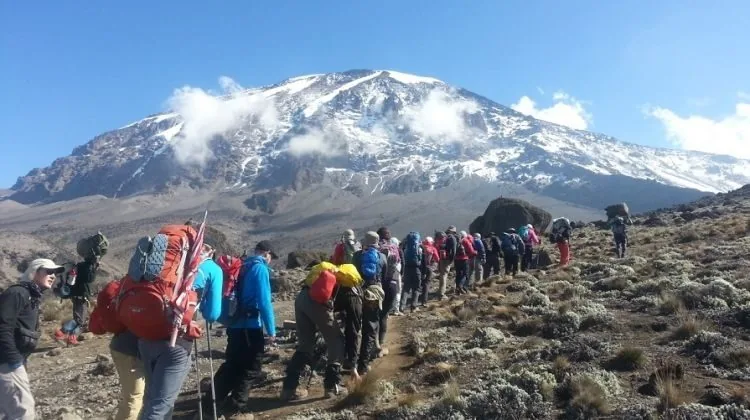
In the afternoon you continue onto the Shira Plateau, where you get your first views of the Western Breach and its glaciers. Shira Camp is exposed, and temperatures can drop below freezing at night, so have your warm layers ready.
- Overnight: Shira Camp (tents)
- Meals: Breakfast, lunch and dinner, plus drinking water
- Terrain: Moorland and open plateau
Day 3: Shira to Lava Tower (4,600 m) and Down to Barranco Camp (3,950 m)
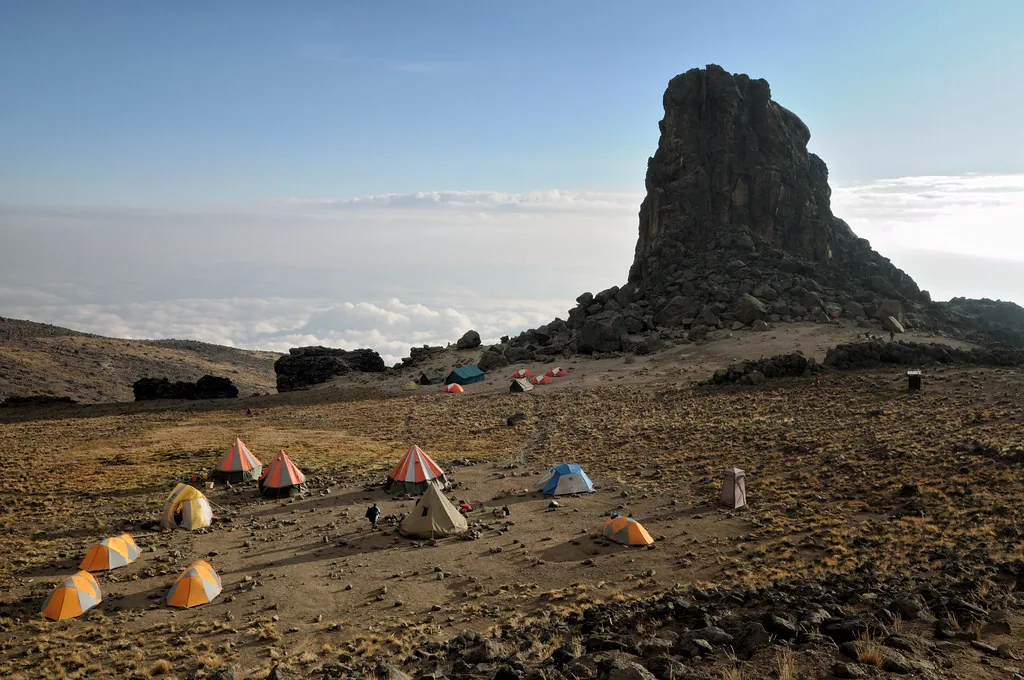
Day 3 is the main acclimatisation day. You climb east on a steep path above the last vegetation to Lava Tower, a volcanic plug at about 4,600 m, in five to six hours. Lunch here gives your body time at altitude.
You then descend about two hours below the Western Breach to Barranco Camp, past giant groundsels. The sunset over the Barranco Valley is one of the highlights of the climb. Pay attention to how you feel and tell your guide about any symptoms of altitude sickness.
- Overnight: Barranco Camp (tents)
- Meals: Breakfast, lunch and dinner, plus drinking water
- Terrain: Alpine desert, then a descent into the valley
Day 4: Barranco Wall to Karanga Camp (about 4,000 m)
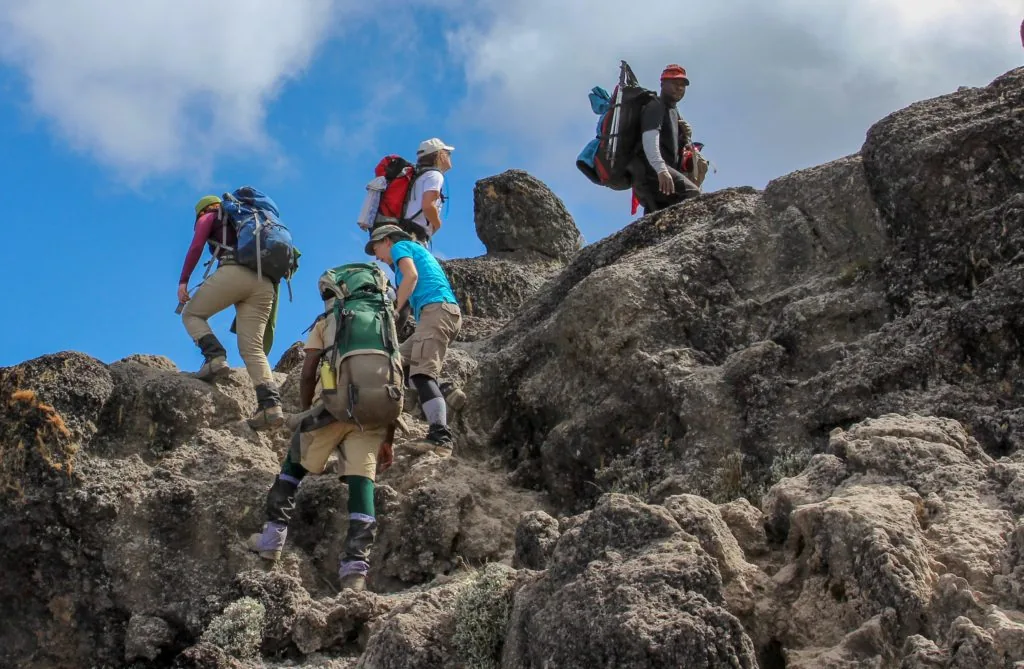
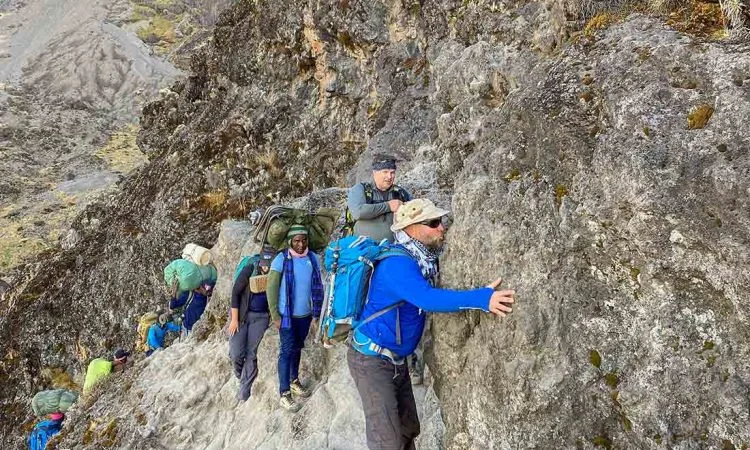
Day 4 starts with the Great Barranco Wall, which looks daunting but is a non-technical scramble; you use your hands in a few places, and your guides help on the trickier steps. From the top, you continue below the Heim Glacier and then descend into the Karanga Valley.
Karanga is the last water source on the route, so the porters collect water here for the rest of the ascent. You arrive in time for lunch and have the afternoon to rest or take a short walk, with views of Mawenzi. This is the extra night that sets the 7-day itinerary apart.
- Overnight: Karanga Camp (tents)
- Meals: Breakfast, lunch and dinner, plus drinking water
- Terrain: Rock scramble, ridges and valleys
Day 5: Karanga Camp to Barafu Camp (about 4,650 m)
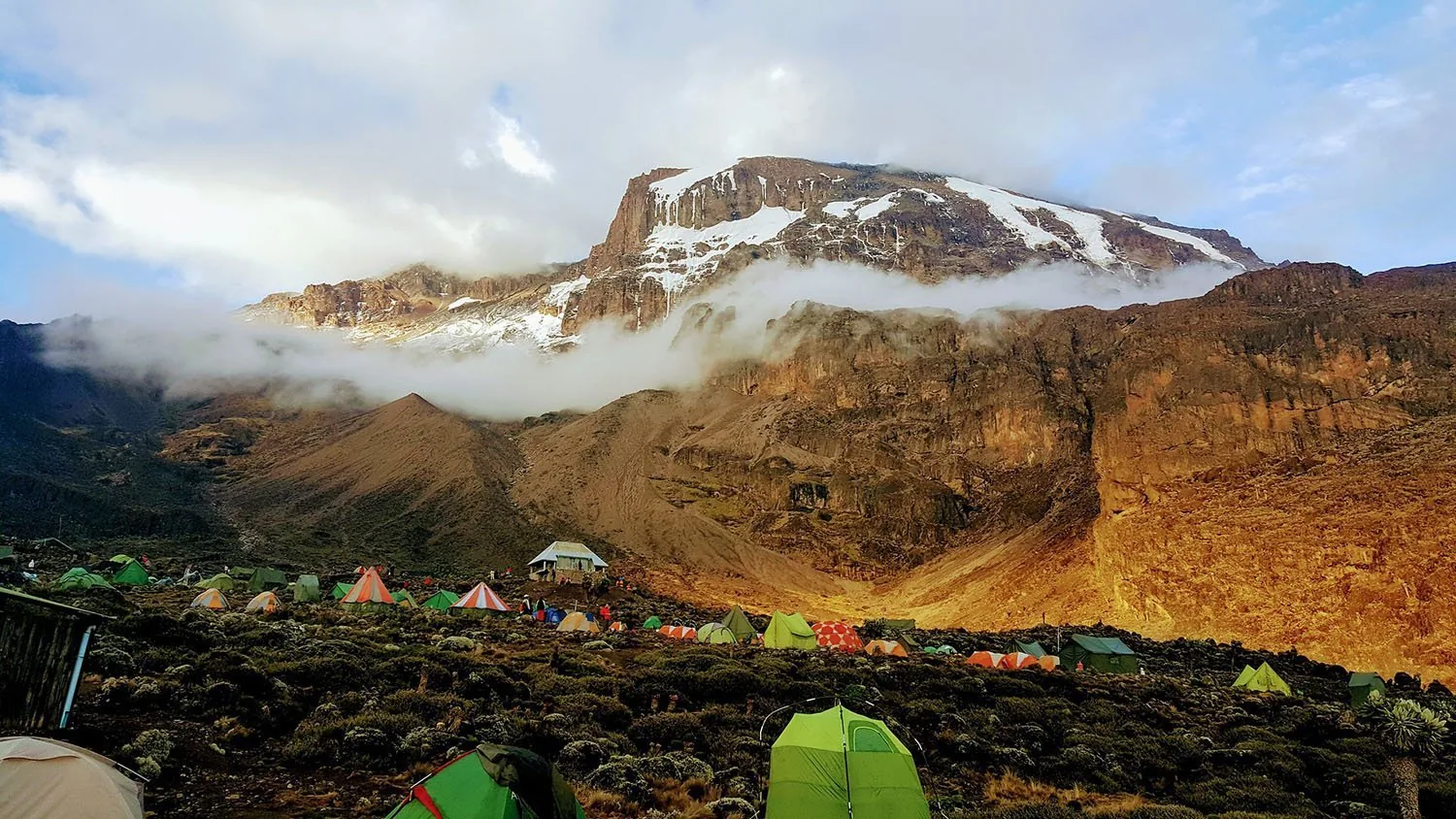
Day 5 is a short climb east across ridges and valleys until you join the Mweka Route, then up the ridge to Barafu Camp. You arrive around midday, with time to rest.
Barafu is a rocky, windy ridge, so learn the layout of the camp before dark and keep your headlamp handy. Prepare your summit gear, change your batteries and go to bed by about 7 pm to sleep a few hours before summit night.
- Overnight: Barafu Camp (tents), with a short rest before summit night
- Meals: Breakfast, lunch and dinner, plus drinking water
- Terrain: Rocky ridges
Day 6: Summit Night to Uhuru Peak (5,895 m), Then Down to Mweka Camp
Day 6 starts around midnight. You climb for about six hours up steep scree switchbacks between the Ratzel and Rebmann glaciers to Stella Point (5,756 m) on the crater rim, which most climbers consider the hardest part of the trek. With good timing you will see the sunrise here.
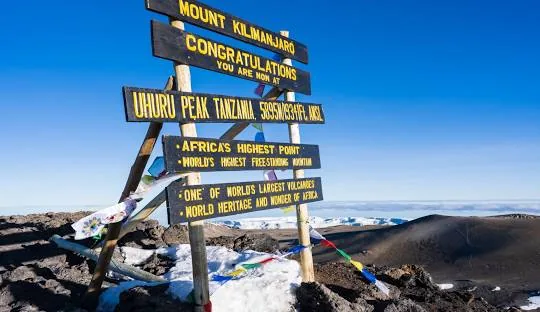
Keep moving because of the cold, and walk along the rim for about another hour to Uhuru Peak, the highest point in Africa. After photos at the summit sign, you descend to Barafu for a rest and a meal, then continue down to Mweka Camp at about 3,100 m.
- Overnight: Mweka Camp (tents)
- Meals: Breakfast, lunch and dinner, plus drinking water
- Terrain: Steep scree, crater rim, long descent
Day 7: Mweka Camp to Mweka Gate and Back to Moshi
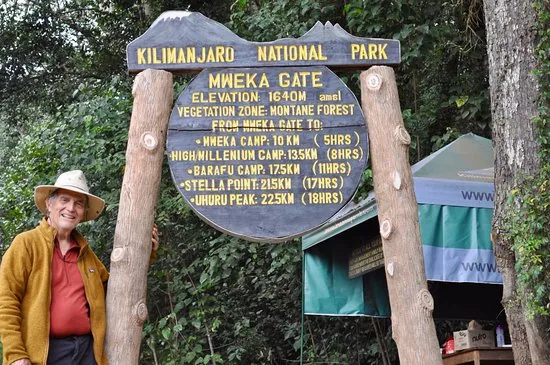
Day 7 is a scenic three-hour descent through the rainforest to Mweka Gate. Wait until you and all of your gear have reached the gate before tipping your crew. After signing out, you receive your summit certificate: green for reaching Stella Point, and gold for reaching Uhuru Peak.
If the road is too muddy for vehicles, you walk another hour to Mweka Village, about 3 km away. You have a hot lunch there before the drive back to your hotel in Moshi. Your hotel night after the climb is included in the price.
- Overnight: Your hotel in the Kilimanjaro area (included)
- Meals: Breakfast and lunch
- Terrain: Rainforest descent
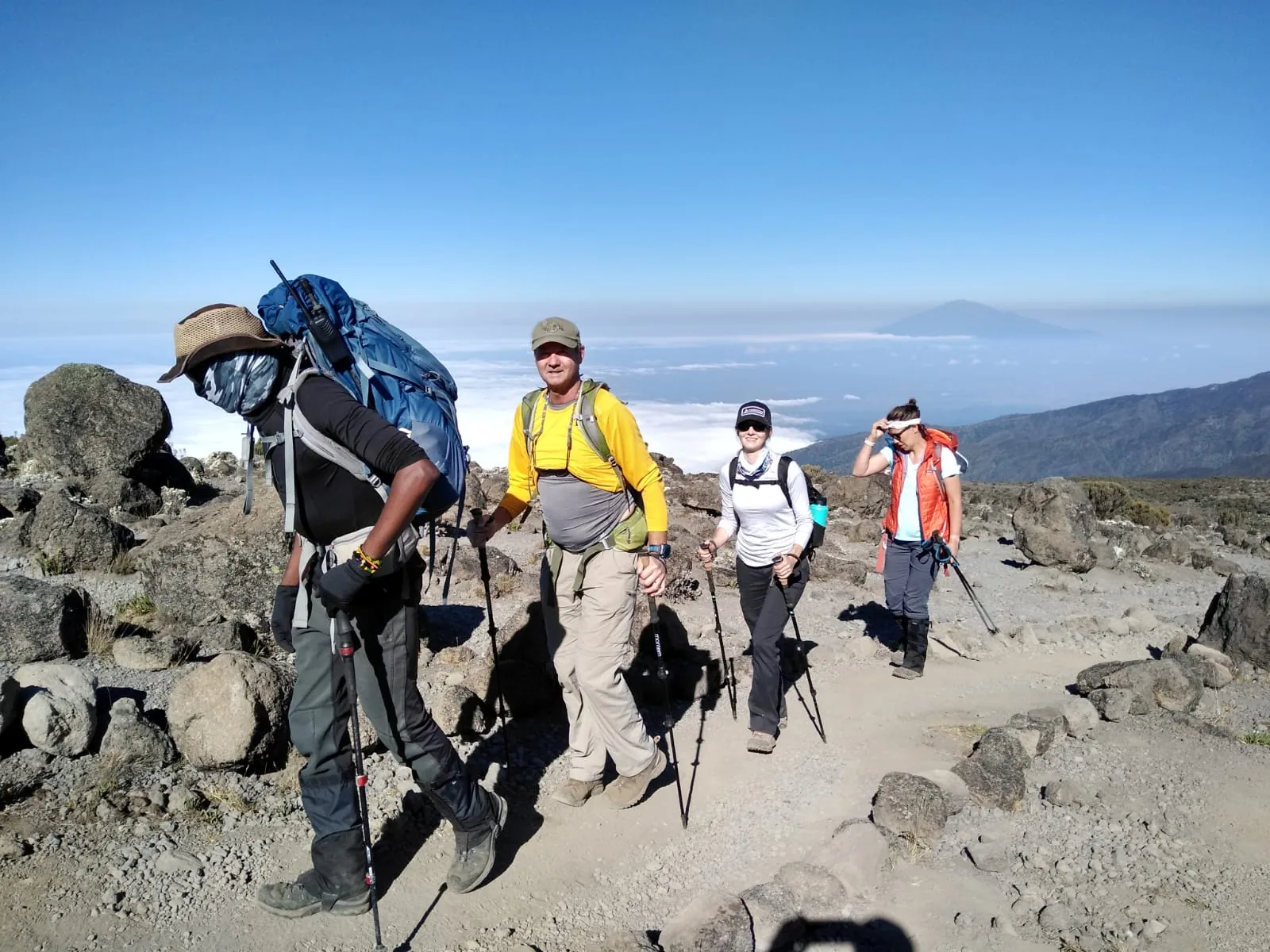
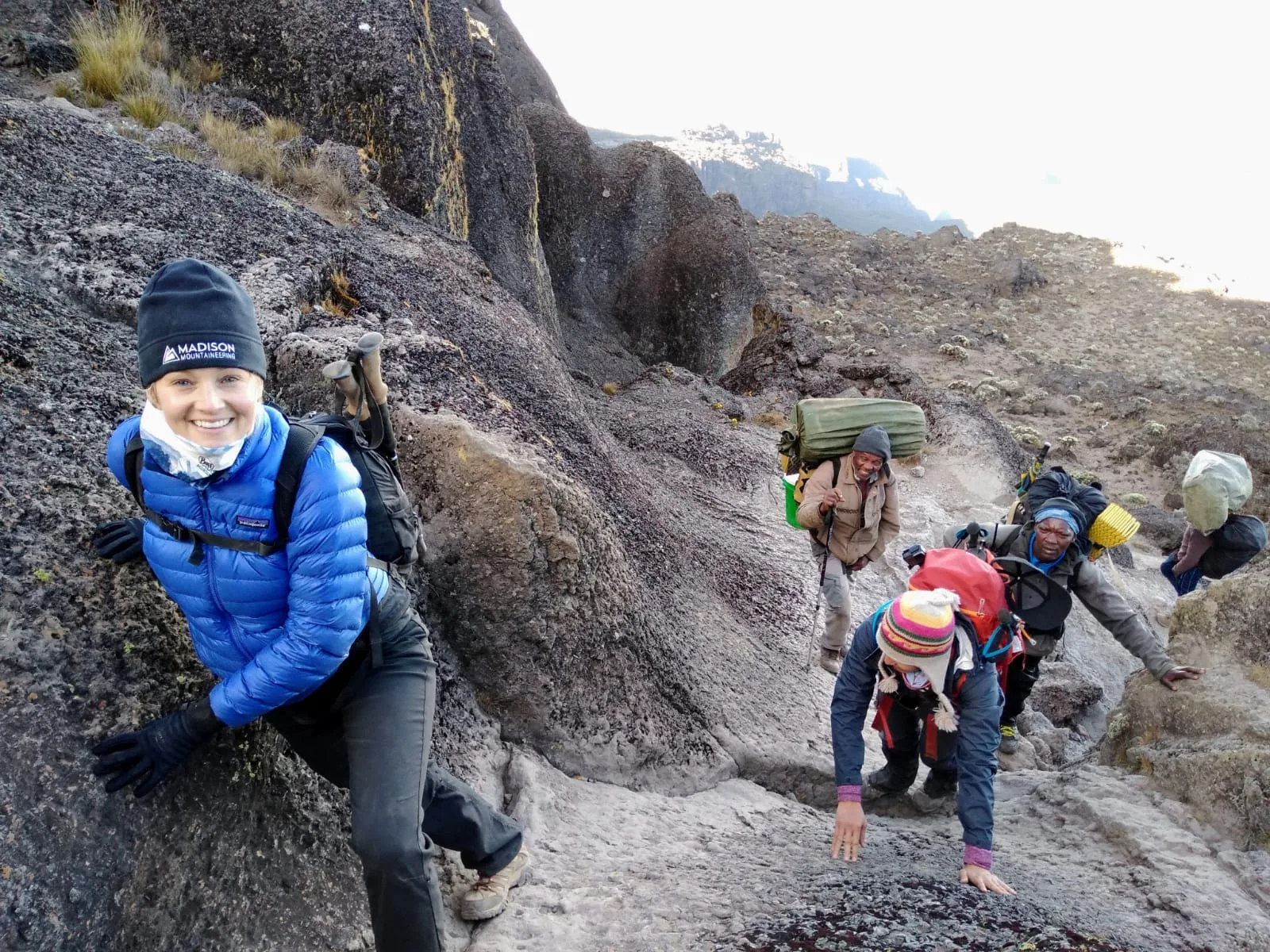
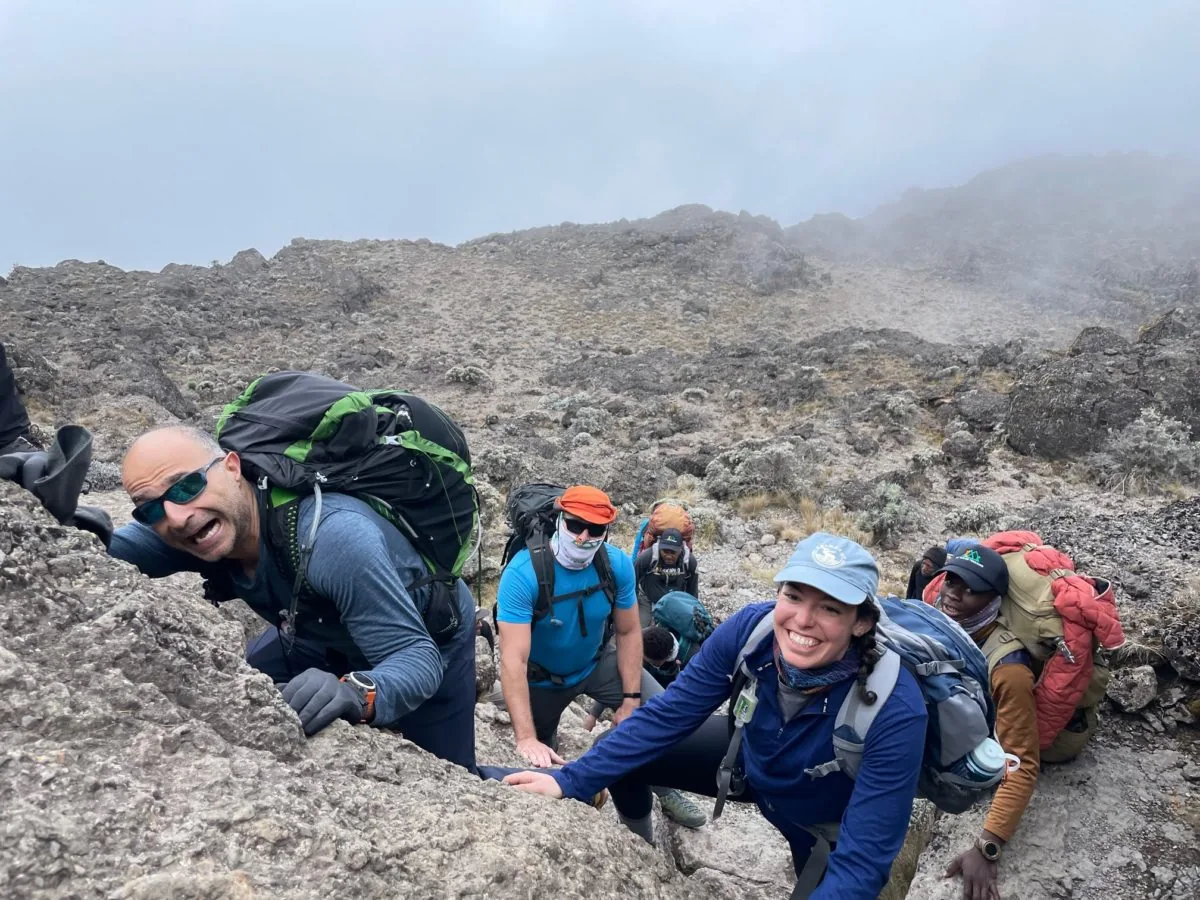
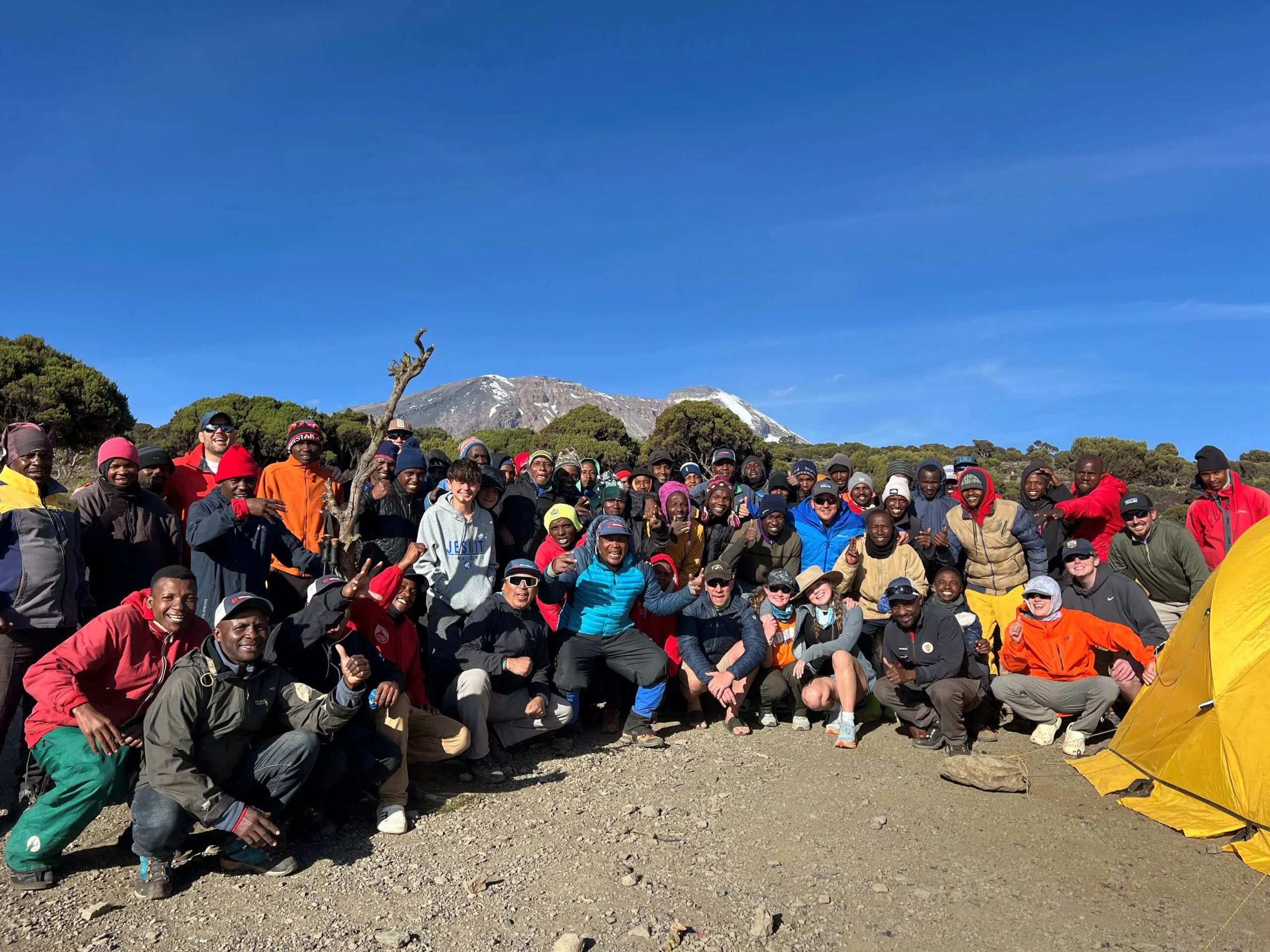
Photos from the Machame Route
Why Does the 7-Day Machame Acclimatise Better?
The 7-day Machame acclimatises better than the 6-day version because it adds a night at Karanga Camp, at about 4,000 m, before you move up to Barafu. You also keep the Lava Tower day, when you climb to about 4,600 m and sleep at Barranco, about 650 m lower: the 'climb high, sleep low' principle.
The extra night means you reach Barafu around midday on Day 5 rather than late afternoon, so you have more rest before summit night. Altitude sickness depends on how fast you gain height, not on fitness, so this slower schedule is one of the most effective ways to improve your chances.
If you want an even more gradual ascent, the 8-day Lemosho starts on the western side and takes longer to gain height. Our guide to improving your summit chances explains the other factors.
What Is Summit Night Like?
Summit night starts from Barafu Camp around midnight. You climb by headlamp up a long, steep scree slope between the Ratzel and Rebmann glaciers to Stella Point on the crater rim, usually reaching it around sunrise. Uhuru Peak is about another hour along the rim.
It is very cold, often well below freezing with wind chill, so you wear all your warm layers. Keep moving steadily and take only short breaks. Your guide turns climbers back if they show serious signs of altitude sickness, because safety always comes before the summit.
- Keep water in an insulated bottle so it does not freeze
- Keep phone and camera batteries warm inside your jacket
- Eat small snacks often, even if you are not hungry
- Reaching Stella Point earns a certificate even if you do not continue to Uhuru Peak
When Is the Best Time to Climb the Machame Route?
The Machame Route can be climbed year-round, but the driest windows, January to mid-March and June to October, give the best trail conditions. The 7-day schedule also gives a little more flexibility if the weather is poor on one day.
| Season | Months | What to expect |
|---|---|---|
| Short dry season | January to mid-March | Generally dry and clear, with cold summit nights and a chance of snow near the top. A popular climbing window. |
| Long rains | Late March to May | The wettest period, with muddy forest trails and limited views. Fewer climbers; climbing is possible but more demanding. |
| Main dry season | June to October | Dry and usually clear, with the coldest nights. The busiest period, especially July to September. |
| Short rains | November | Afternoon showers are common, with quieter trails. |
| Holiday season | December | Drying out again, but busy over Christmas and New Year. |
How Much Does the 7-Day Machame Climb Cost?
The 7-day Machame Route starts from $2,090 per person. The price covers park and camping fees, mountain tents and camping equipment, your guides, cook and porters, all meals on the mountain, and transfers, plus a hotel night before and after the climb. Personal gear and tips are extra.
Kilimanjaro park fees are charged per day, so each extra day on the mountain adds to the cost. Contact us for an exact quote for your dates and group size.
Price per Person by Group Size
| Group size | Budget | Mid-range | Luxury |
|---|---|---|---|
| 1 person | $1,945 | $2,130 | $2,325 |
| 2 people | $1,915 | $2,090 | $2,235 |
| 3 people | $1,925 | $2,125 | $2,225 |
| 4 people | $1,915 | $2,090 | $2,235 |
| 5 people | $1,920 | $2,110 | $2,230 |
| 6 people | $1,915 | $2,090 | $2,235 |
What Affects the Price?
- Number of days: each extra day on the mountain adds park fees, crew wages and food.
- Accommodation level: your hotel nights before and after the climb can be budget, mid-range or luxury.
- Room sharing: solo travellers pay a little more because they have a single room for the hotel nights.
- Park fees: Kilimanjaro National Park fees are set by the park authority and can change, so we confirm your price in writing before you pay.
What Is Included in the Price?
Kilimanjaro National Park entrance and conservation fees
Camping fees, plus mountain tents and camping equipment
Rescue fee and emergency oxygen
A registered lead mountain guide and assistant guides
Porters and a mountain cook
All meals on the mountain, plus treated drinking water
Two hotel nights in the Kilimanjaro area, before and after the climb, at your chosen level
Transport between your hotel and the park gate
Round-trip airport transfer
All government taxes and VAT
What Is Not Included?
Personal climbing gear (rental is available in Moshi)
International flights and Tanzania visa
Extra hotel nights beyond the two included
Travel insurance, which must cover high-altitude trekking
Tips for your guides, cook and porters
Personal items, snacks and drinks other than water
Any government increase in park fees or taxes
Where Will You Sleep on the Machame Route?
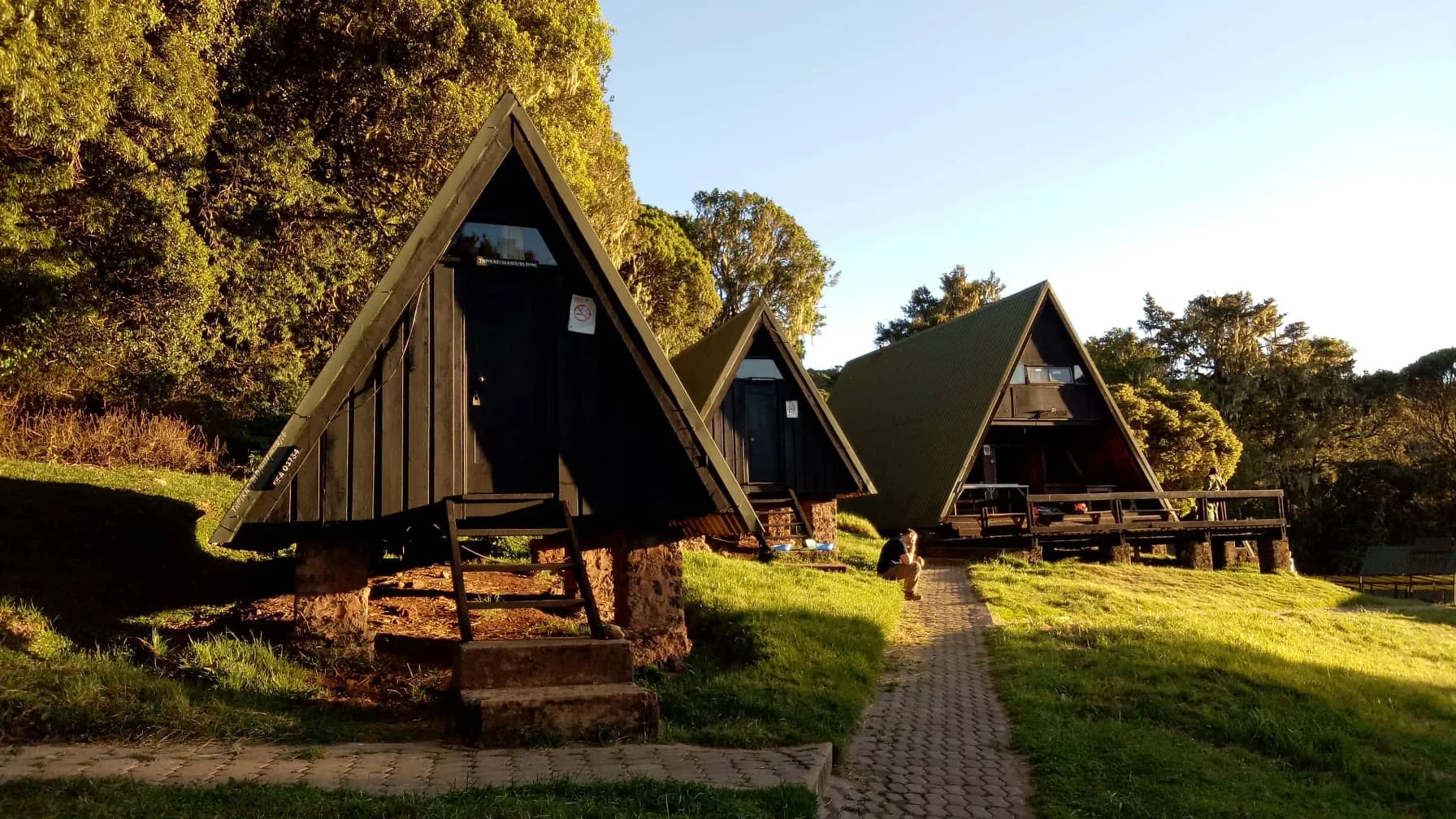
You sleep in mountain tents at designated park campsites on all six nights: Machame Camp, Shira, Barranco, Karanga, Barafu and Mweka. Your crew carries and sets up the tents, prepares meals in a mess tent and boils water for drinking and washing.
Campsites have basic shared toilets. Nights are cold from Shira onwards, so a warm four-season sleeping bag is essential. If you would prefer huts, consider the 6-day Marangu Route.
Is the 7-Day Machame Route Right for You?
The 7-day Machame suits most first-time climbers who are reasonably fit and happy camping. If you prefer huts, have less time, or want the most gradual route, another package may suit you better.
A Good Fit If You…
- Are climbing Kilimanjaro for the first time
- Want a good balance of scenery, acclimatisation and length
- Are happy camping for six nights
- Want more rest before summit night than the 6-day version allows
Consider Another Route If You…
- Have only six days: 6-Day Machame
- Prefer huts: 6-Day Marangu
- Want a quieter, more gradual start: 8-Day Lemosho
How Does This Route Compare?
The 7-day Machame is the package we recommend most often. It shares the Machame scenery with the 6-day version, but adds the Karanga night for better acclimatisation.
| Package | Sleeping | Acclimatisation | Difficulty | From |
|---|---|---|---|---|
| 5-Day Marangu | Huts | Limited: no acclimatisation day | Moderate, but altitude gained quickly | $1,600 |
| 6-Day Marangu | Huts | Good: rest day at Horombo | Moderate | $1,845 |
| 6-Day Machame | Tents | Good: climb high to Lava Tower, sleep low | Challenging | $1,845 |
| 7-Day Machame (this climb) | Tents | Very good: extra night at Karanga | Challenging, steadier pace | $2,090 |
| 7-Day Lemosho | Tents | Very good: gradual western approach | Moderate to challenging | $2,090 |
| 8-Day Lemosho | Tents | Excellent: the most gradual of our routes | Moderate to challenging, slowest pace | $2,335 |
How Should You Prepare?
Train for two to three months with long hikes on hilly ground, carrying a daypack, and include some steep climbs to prepare for the Barranco Wall and summit night. Arrive in Moshi at least a day before the climb.
Key Items to Pack
- Broken-in waterproof hiking boots
- A four-season sleeping bag rated to about −10°C or colder
- An insulated down or synthetic jacket, plus fleece and thermal layers
- Waterproof jacket and trousers
- Warm hat, warm gloves and a buff
- Headlamp with spare batteries for summit night
- Trekking poles, especially for the descent
- Water bottles or a hydration bladder for about 3 litres
- Sunglasses, sunscreen and lip balm
- A 30–35 litre daypack; porters carry your main bag
Full lists: Kilimanjaro gear list · 12-week training plan
How Much Should You Tip the Crew?
Tipping is customary on Kilimanjaro, and tips are an important part of the crew's income. Tips are usually given at the end of the climb, at the gate or at your hotel, and are counted per crew member rather than per climber.
The Kilimanjaro Porters Assistance Project (KPAP) publishes recommended daily ranges per group: roughly $20–25 per day for the lead guide, $15–20 for each assistant guide, $12–15 for the cook and $8–10 for each porter. We give you a list of your crew before the climb so you can plan, and you are welcome to hand tips to each crew member yourself.
7-Day Machame Route FAQs
Kilimanjaro Planning Guides
- All Kilimanjaro Climbing Packages
- Marangu vs Machame vs Lemosho: Which Route Is Best?
- Kilimanjaro Summit Success: How to Improve Your Chances
- How to Train for Kilimanjaro: 12-Week Plan
- What to Pack for Kilimanjaro: Complete Gear List
- Kilimanjaro National Park: Zones and Gates
- After the Climb: 2-Day Arusha & Tarangire Safari
- After the Climb: Zanzibar Day Tours