What Weather Do You Need to Pack For on Kilimanjaro?
You need to pack for everything from warm, humid rainforest to freezing, windy conditions at the summit. Temperatures at the gates are often in the 20s °C during the day, while summit night can fall well below freezing, especially with wind chill. You pass through five climate zones in a few days.
| Zone | Typical conditions | What you wear |
|---|---|---|
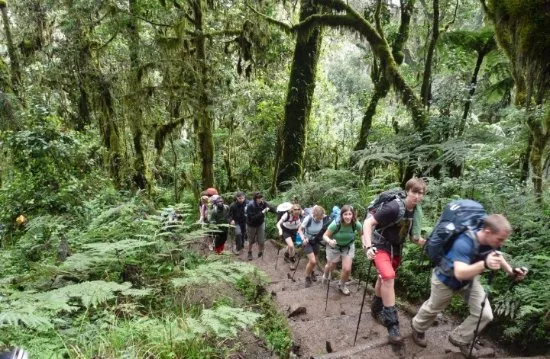
| Rainforest (about 1,800–2,800 m) | Warm, humid, often wet and muddy | Light trekking shirt and trousers, rain jacket, gaiters |
| Heath and moorland (about 2,800–4,000 m) | Mild days, cool to cold nights, sun and wind | Base layer, fleece; add an insulated jacket in the evening |
| Alpine desert (about 4,000–5,000 m) | Strong sun by day, below freezing at night, windy | Base layers, fleece, softshell or waterproof, sun hat |
| Arctic summit (above about 5,000 m) | Well below freezing, strong wind, possible snow | Every layer: thermals, fleece, insulated jacket, shell, mittens, warm hat |
The key is layering. You add and remove layers through the day rather than carrying one heavy jacket for every condition.
How Should You Layer Your Clothing for Kilimanjaro?
Use four layers, each with a different job. Avoid cotton, which stays wet and cold; choose merino wool or synthetic fabrics instead.
| Layer | Purpose | What to bring |
|---|---|---|
| Base layer | Moves sweat away from your skin | 2–3 synthetic or merino tops, 1–2 thermal leggings |
| Mid layer | Traps warmth | 1–2 fleece jackets, or a fleece plus a light insulated jacket |
| Insulation | Keeps you warm when resting and on summit night | A warm down or synthetic jacket, ideally with a hood |
| Shell | Blocks wind and rain | A waterproof, breathable jacket and trousers |
What Is the Complete Kilimanjaro Packing Checklist?
The checklist below covers everything you need on the mountain. Your crew supplies tents (on camping routes), meals, cooking equipment and treated drinking water.
Clothing
- 2–3 base-layer tops and 1–2 thermal leggings
- 2 pairs of trekking trousers (one can be convertible)
- 1–2 fleece jackets
- Warm insulated down or synthetic jacket
- Waterproof jacket and waterproof trousers
- Warm hat, sun hat or cap, and a buff or neck gaiter
- Lightweight liner gloves and warm insulated mittens or gloves
- 4–5 pairs of hiking socks and 1–2 pairs of warm summit socks
- Underwear and a comfortable set of clothes for camp
Footwear
- Waterproof hiking boots with ankle support, broken in on several long hikes
- Camp shoes or trail runners for the evenings
- Gaiters for mud, scree and snow
Sleeping
- Four-season sleeping bag rated to about −10°C or colder
- Sleeping bag liner for extra warmth
- Inflatable pillow or a stuff sack filled with clothes
Bags
- Soft duffel bag for the porter to carry, about 70–90 litres
- Daypack of 30–35 litres with a rain cover
- Dry bags to keep clothes and sleeping bag dry
Accessories
- Headlamp with spare batteries
- Trekking poles
- Water bottles or a hydration bladder for about 3 litres, plus an insulated cover
- Sunglasses with good UV protection
- Small towel and a few zip-lock bags for rubbish
Health and Toiletries
- Sunscreen and lip balm with SPF
- Personal first-aid kit: plasters, blister care, painkillers and any prescription medicines
- Altitude medication, if prescribed by your doctor
- Hand sanitiser, wet wipes and toilet paper
- Travel-size toothbrush, toothpaste and other toiletries
Documents, Money and Electronics
- Passport and a copy of your travel insurance, covering trekking up to about 6,000 m
- Cash in small US dollar notes for tips
- Phone and camera, with a power bank, as there is no electricity on the mountain
- Snacks you enjoy for the trail and summit night
What Do You Need for Summit Night?
Summit night is the coldest and hardest part of the climb. You start around midnight and climb for six to eight hours in temperatures that are often well below freezing, especially with wind. This is where good gear matters most.
- All your base layers, a fleece and your insulated jacket, with the waterproof shell on top
- Thermal leggings under your trekking or waterproof trousers
- Warm mittens (warmer than gloves) over thin liner gloves
- A warm hat that covers your ears, plus a buff for your face
- Warm socks, and gaiters to keep scree out of your boots
- Headlamp with fresh batteries; keep spares in an inside pocket, because cold drains them quickly
- Water in an insulated bottle, kept upside down so the lid does not freeze
- High-energy snacks you can eat with gloves on
Read more about summit night and acclimatisation in our guide to improving your summit chances.
What Can You Rent in Moshi Instead of Bringing?
Many outfitters in Moshi rent climbing gear at reasonable daily rates, which saves you buying items you may not use again. Quality varies, so inspect everything before you accept it, and check sleeping bag ratings carefully.
| Item | Rent in Moshi? | Our advice |
|---|---|---|
| Sleeping bag | Yes | Rent one rated to about −10°C or colder, or bring your own if you feel the cold |
| Trekking poles | Yes | Easy to rent and useful on every route |
| Gaiters | Yes | Recommended, especially in the rainy months |
| Insulated jacket | Often | Bring your own if you can, because fit and warmth matter on summit night |
| Duffel bag | Yes | A soft, waterproof duffel is easiest for porters |
| Hiking boots | Not recommended | Bring your own broken-in boots to avoid blisters |
Crampons are rarely needed on the standard routes. If there is ice near the summit, your guide will advise you before the climb.
How Much Can Your Porter Carry?
Keep your duffel to about 15 kg. Kilimanjaro National Park limits how much each porter may carry, which protects porters from overloading, and your bag is carried together with part of the crew's own load. Leave extra luggage at your hotel in Moshi or Arusha, which you can collect after the climb.
Your daypack, which you carry yourself, should weigh about 5–8 kg: water, snacks, layers, rain gear, sunscreen and a camera. Practise carrying this weight on your training hikes.
Plastic carrier bags are banned in Tanzania, and may be confiscated on arrival, so use dry bags or stuff sacks to waterproof your gear.
What Should You Leave at Home?
Our guides often see climbers carry things they never use. Leave these behind:
- Jeans and cotton clothing, which stay wet and cold
- More than two pairs of trekking trousers
- Heavy camera tripods
- Full-size toiletries; use travel sizes
- Extra shoes beyond your boots and one pair of camp shoes
- Valuables and jewellery you do not need
- Plastic carrier bags
How Should You Prepare Your Gear Before the Climb?
Test your gear on your training hikes so there are no surprises on the mountain. Break in your boots over several long walks, practise with your trekking poles, and try your layering system in cold or windy weather. Our 12-week training plan builds in gear practice.
When you arrive, your guide checks your gear at the pre-climb briefing in Moshi or Arusha and can help you rent anything missing. If you have not chosen a route yet, compare them in our route comparison guide or on our Kilimanjaro climbing page.