What Is the Summit Success Rate on Kilimanjaro?
There is no official, published summit success rate for each Kilimanjaro route. The figures you see online are mostly estimates from tour operators, and they are not measured in the same way. Some count reaching the crater rim at Gillman's Point or Stella Point as success, while others count only Uhuru Peak.
What is consistent across guides and climbers is the pattern: the more days an itinerary spends acclimatising, the higher the share of climbers who reach the top. Short five-day climbs have the smallest margin; seven- and eight-day climbs have the largest.
| Itinerary length | Acclimatisation margin | Our packages |
|---|---|---|
| 5 days | Small: altitude is gained quickly with no rest day | 5-Day Marangu |
| 6 days | Moderate: one acclimatisation day or climb-high-sleep-low day | 6-Day Marangu, 6-Day Machame |
| 7 days | Good: gradual gain plus extra rest before summit night | 7-Day Machame, 7-Day Lemosho |
| 8 days | Large: the most gradual of our itineraries | 8-Day Lemosho |
Be cautious of any operator quoting a very high success rate without explaining how it is measured.
Why Do Climbers Turn Back on Kilimanjaro?
Most climbers who turn back do so because of altitude sickness. It is caused by gaining height faster than the body can adapt to lower oxygen levels, and it can affect anyone, regardless of age, sex or fitness. Very fit climbers are sometimes more at risk because they walk too fast.
Other reasons include exhaustion on summit night, stomach illness, cold, injuries such as twisted ankles, and occasionally weather. Summit night is the hardest part of the climb: you walk through the night, in the cold, at the highest altitude, after several days of effort.
What Are the Symptoms of Altitude Sickness?
Mild altitude sickness feels like a hangover: headache, nausea, tiredness and poor sleep. It is common and usually improves with rest. Severe forms affect the brain or lungs and need immediate descent. The table summarises what to watch for.
| Level | Common signs | What to do |
|---|---|---|
| Mild acute mountain sickness (AMS) | Headache, nausea, loss of appetite, tiredness, dizziness, poor sleep | Tell your guide, rest, drink, eat, walk slowly; do not climb higher until symptoms ease |
| Worsening AMS | Severe headache not eased by rest or painkillers, vomiting, increasing weakness | Stop ascending; your guide assesses whether you need to descend |
| High-altitude cerebral oedema (HACE) | Confusion, loss of coordination, unusual behaviour, extreme drowsiness | Emergency: descend immediately with your guides |
| High-altitude pulmonary oedema (HAPE) | Breathlessness at rest, persistent cough, chest tightness, crackling breathing | Emergency: descend immediately with your guides |
The most important rule is never to hide symptoms. Your guides can only help if they know how you feel, and descending early is far safer than descending late.
How Can You Improve Your Chances of Reaching the Summit?
You can improve your chances by giving your body time to adapt and by looking after it every day on the mountain. These are the steps that make the most difference.
1. Choose more days
This is the single biggest decision. An extra day, such as choosing the 7-day Machame over the 6-day, spreads the altitude gain and adds rest before summit night. We recommend the longer version of any route for first-time high-altitude trekkers. Compare options in our route comparison guide.
2. Choose a route that climbs high and sleeps low
Machame and Lemosho both climb to Lava Tower at about 4,600 m before descending to sleep at Barranco Camp, about 650 m lower. This 'climb high, sleep low' pattern helps your body adapt. The 6-day Marangu includes a similar acclimatisation hike to Zebra Rock.
3. Walk slowly: pole pole
'Pole pole' means 'slowly, slowly' in Swahili, and you will hear it all the way up. Walk at a pace where you can talk comfortably, especially on the first days when you feel strong. Starting too fast is one of the most common mistakes our guides see.
4. Drink plenty of water
Aim for about 3–4 litres a day. The air is dry, and you lose a lot of water through breathing at altitude. Your crew treats and boils drinking water for you each day.
5. Keep eating, even without an appetite
Altitude often reduces your appetite, but your body needs energy for long walking days. Eat small amounts often, and bring snacks you enjoy for the trail and summit night.
6. Talk to your doctor about altitude medication
Many climbers use acetazolamide (Diamox) to help with acclimatisation. It is a prescription medicine and is not suitable for everyone, so discuss it with your doctor before you travel. It does not replace a slow ascent.
7. Train for endurance
Fitness does not prevent altitude sickness, but it makes long days and summit night less exhausting. Focus on long hikes and back-to-back hiking days. Our 12-week training plan shows how.
8. Stay warm and dry
Cold drains your energy, especially on summit night. Bring proper layers, a warm sleeping bag and good gloves. See our complete Kilimanjaro gear list.
9. Arrive rested
Arrive in Moshi or Arusha at least a day before the climb to recover from your flight and check your gear. Avoid alcohol before and during the climb, as it affects sleep and hydration.
10. Be honest with your guide
Tell your guide every day how you feel, including headaches, nausea, poor sleep or dizziness. Early action, such as resting or slowing the pace, often prevents mild symptoms from becoming serious.
What Does Your Guide Team Do to Keep You Safe?
Your guides set a safe pace, check on how you are feeling every day and decide when it is not safe to continue. Their priority is getting you up and down safely, and the summit comes second.
- Set a slow, steady pace from the first day
- Ask about symptoms each day and watch for warning signs
- Carry emergency oxygen, which is included in all our climbs, along with the park rescue fee
- Arrange an immediate descent if serious symptoms appear, because descent is the most effective treatment
- Help with layering, hydration and food on summit night
What Counts as Reaching the Summit?
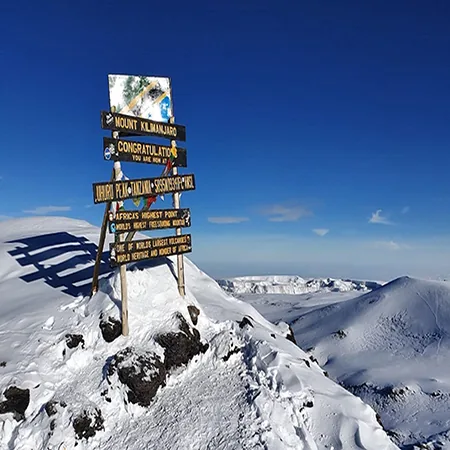
The true summit of Kilimanjaro is Uhuru Peak at 5,895 m. Reaching the crater rim at Gillman's Point (5,681 m) on the Marangu Route or Stella Point (5,756 m) on Machame and Lemosho is also a major achievement and earns a certificate. Kilimanjaro National Park issues a green certificate for reaching the crater rim and a gold certificate for reaching Uhuru Peak.
From the rim, Uhuru Peak is about one to two more hours along the crater edge. Your guide decides whether you continue based on your condition, the weather and the time.
Checklist: How to Give Yourself the Best Chance
- Book seven or eight days if you can
- Choose a route with a 'climb high, sleep low' day
- Train with long and back-to-back hikes for two to three months
- Discuss altitude medication with your doctor
- Pack proper cold-weather gear and a warm sleeping bag
- Arrive at least one day before the climb
- Walk slowly, drink 3–4 litres a day and keep eating
- Tell your guide about any symptoms straight away
Ready to choose a climb? Compare all routes and prices on our Kilimanjaro climbing page.