Camera Settings That Actually Work on Safari
Shutter Speed: Your Most Important Setting
Fast shutter speed is the key to sharp wildlife photos. In good light, aim for 1/1000s or faster for stationary animals and 1/1600s or faster for moving animals. Motion blur from too-slow shutter speed is the most common cause of blurry safari photos — not camera shake.
ISO: How to Handle Low Light
Modern cameras handle high ISO (1600–6400) far better than older models. In the golden hour (first and last hour of daylight) or in shade under trees, raise your ISO rather than slowing your shutter speed. A grainy, sharp photo is better than a blurry, clean one.
Continuous Shooting Mode
Always shoot in continuous/burst mode for any moving animal. You'll take 30 photos and 3 will be sharp. Delete the rest. The cost of memory cards is negligible; the cost of a missed moment is permanent.
The Best Light of the Day
The first and last 90 minutes of daylight are dramatically better for photography than midday. During golden hour, light is warm, directional, and soft — it reveals texture in fur, makes eyes sparkle, and creates depth in landscapes.
Midday (10am–3pm) in Tanzania produces harsh overhead light that flattens textures and creates unflattering shadows. This is also when many animals rest in shade and are least active.
This is why our drives start at 6–7am and often include a siesta period through midday.
Common Mistakes and How to Avoid Them
Shooting through glass — Most safari vehicles have open windows and rooftop hatches for this reason. Always shoot through an open window or the roof hatch, never through glass, which causes focus issues and reduces image quality.
Reacting too late — Keep your camera ready at all times, not in your lap or bag. Action moments happen in seconds.
Sitting down — Standing through the roof hatch gives a higher, cleaner angle over tall grass. Get off your seat.
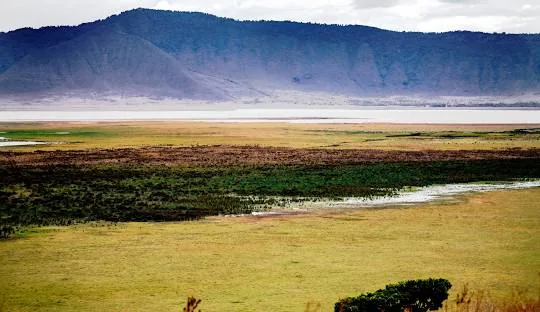
Zooming in too close — The most impactful wildlife photos often include environmental context — the landscape behind the animal, the grass in the foreground. Don't fill the frame with just the animal every time.
Over-editing — Oversaturated, HDR-processed safari photos look artificial. Minimal editing of well-exposed originals almost always produces better results.