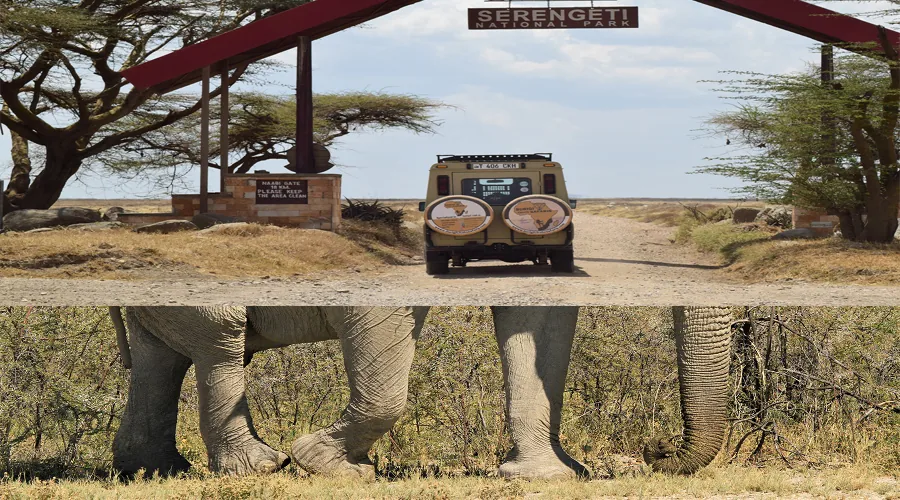
The Same Ecosystem, Two Countries
The Serengeti (Tanzania) and Masai Mara (Kenya) are different sections of the same continuous ecosystem — the Serengeti–Mara. The wildebeest migration moves between them annually, spending roughly eight months in the Serengeti before crossing the Mara River into Kenya in July–August, then returning south by October.
Choosing between them is partly about timing and partly about genuine differences in experience.
Wildlife: Which Park Has More Animals?
The Serengeti covers 14,750 square kilometers — nearly fifteen times the size of the Masai Mara. It holds higher overall wildlife numbers for this reason, including larger lion populations and more leopards. The Masai Mara is smaller and more concentrated.
For day-to-day wildlife sightings outside migration season, the Mara often feels more productive because animals are concentrated in a smaller area. The Serengeti requires more driving to find animals, though the landscape reward is greater.
Cost Comparison: Tanzania vs Kenya
Tanzania is generally less expensive for the same quality of experience. Tanzania's park fees are among the highest in Africa ($70–$80 per person per day in the Serengeti), but overall package prices including accommodation tend to come in below equivalent Masai Mara trips due to differences in lodge pricing.
The Masai Mara has fewer budget options — most camps are in the mid-range to luxury bracket. The Serengeti offers genuine budget camping alternatives alongside luxury tented camps.
Which Park Should You Visit?
- Visit the Serengeti if you have more than 3 days, want to combine it with other Tanzanian parks (Ngorongoro, Tarangire), prefer bigger open landscapes, or want budget camping options.
- Visit the Masai Mara if you're already in Kenya, have limited time, or specifically want the river crossings and don't mind smaller scale.
- Visit both if you're spending 10+ days in East Africa and want the full migration experience across both countries.